Expansion of IoT Applications
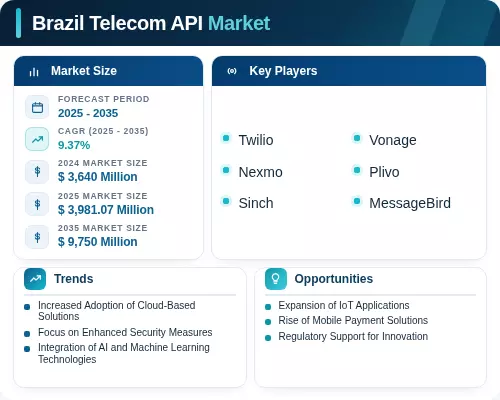
The proliferation of Internet of Things (IoT) devices in Brazil is a significant driver for the telecom api market. As industries increasingly adopt IoT solutions for automation and data collection, the need for robust APIs to facilitate communication between devices becomes paramount. The telecom api market is poised to capitalize on this trend, as APIs enable seamless integration and management of IoT applications. With an estimated 30 million IoT devices expected to be operational in Brazil by 2026, the demand for telecom APIs that support these devices is likely to grow substantially. This expansion not only enhances operational efficiencies for businesses but also opens new avenues for service providers to offer innovative solutions tailored to the needs of various sectors, including agriculture, healthcare, and smart cities.
Rise of Mobile Payment Solutions
The telecom api market in Brazil is significantly influenced by the rise of mobile payment solutions. As consumers increasingly prefer cashless transactions, telecom APIs are essential for enabling secure and efficient payment processing. The market for mobile payments in Brazil is projected to reach $100 billion by 2025, highlighting the critical role of telecom APIs in facilitating these transactions. The telecom api market is thus experiencing heightened interest from financial institutions and fintech companies seeking to integrate payment functionalities into their applications. This trend not only enhances user convenience but also drives competition among service providers to offer innovative payment solutions, further propelling the growth of the telecom api market.
Regulatory Support for Innovation
In Brazil, regulatory frameworks are increasingly supportive of innovation within the telecom api market. The government has implemented policies aimed at fostering technological advancements and encouraging competition among telecom providers. This regulatory environment is conducive to the development and deployment of new APIs, which can enhance service delivery and operational efficiency. For instance, the National Telecommunications Agency (ANATEL) has introduced guidelines that promote the use of APIs for interoperability and service integration. As a result, the telecom api market is likely to see a rise in new entrants and innovative solutions, further driving market growth. The potential for collaboration between telecom operators and third-party developers is also enhanced, leading to a more dynamic ecosystem that benefits consumers and businesses alike.
Growing Demand for Digital Services
The telecom api market in Brazil experiences a notable surge in demand for digital services, driven by the increasing reliance on mobile applications and online platforms. As businesses and consumers alike seek seamless connectivity and enhanced user experiences, telecom APIs play a crucial role in facilitating these services. The Brazilian market has seen a growth rate of approximately 15% annually in the adoption of digital services, which directly correlates with the expansion of the telecom api market. This trend indicates a shift towards more integrated and efficient communication solutions, as companies leverage APIs to enhance their service offerings and improve customer engagement. The telecom api market is thus positioned to benefit significantly from this growing demand, as it enables businesses to innovate and adapt to the evolving digital landscape.
Increased Focus on Customer Experience
In Brazil, there is a growing emphasis on enhancing customer experience within the telecom api market. Companies are increasingly recognizing the importance of delivering personalized and efficient services to retain customers and drive loyalty. Telecom APIs enable businesses to gather and analyze customer data, allowing for tailored service offerings and improved interaction. The telecom api market is likely to benefit from this focus, as organizations invest in technologies that enhance customer engagement and satisfaction. With a projected increase in customer-centric initiatives, the demand for APIs that facilitate real-time communication and feedback mechanisms is expected to rise, further driving innovation and growth within the market.